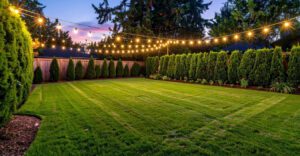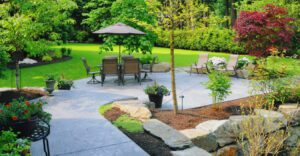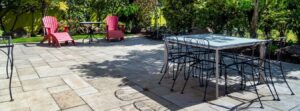
Every day, you walk past that same narrow strip next to your house. The one where nothing grows right, water collects after every storm, and you’ve given up trying to make it look nice. It could be that the steep slope in the back is too hard to mow, or that strange corner where your fence meets the garage.
These dead zones in your yard aren’t just ugly; they’re also bad for your health. They lower the value of your property, make drainage problems worse, waste square footage you’re already taking care of, and make your whole yard feel wrong.
The worst part? Every day you don’t pay attention to them, they get worse. For years, Rich Landscaping Inc. has turned these exact problem areas into some of the best-looking and most useful features on our clients’ properties in the Puget Sound area.
This guide shows you how to find the unused landscape areas, gives you real-life landscape construction ideas, and explains why it’s more important than you think to get professional help.
What Counts as a “Dead Zone” in Your Landscape
A dead zone is any part of your property that doesn’t help you at all. No use, no beauty. These areas often become places where trash is thrown away or just fade into the background while the rest of your yard gets more attention.
- Common Areas Homeowners Overlook -The biggest culprits? There are narrow side yards between buildings that are too small for furniture but too big to hide. Steep slopes that got some basic ground cover years ago and haven’t been thought about since. Strange corners where property lines meet buildings that somehow became permanent homes for your trash cans. There are also places where grass won’t grow under big trees, gaps between driveways and fences, and strange spaces behind garages that are hard to get to.
- Why These Spots Hurt Your Property’s Flow -Dead zones change how your landscape looks. When you look at a beautiful garden and then a neglected strip, the whole property feels smaller and less cared for. You’re wasting serious backyard space utilization potential. That side yard could be used to store your stuff or give you a clean pathway. The slope could be beautiful terraced gardens. Poor drainage loves hanging out in these forgotten spots, creating standing water and erosion headaches. Efficient landscape planning means actually using what you’ve got.
Smart Construction Ideas to Turn Dead Zones Into Usable Spaces
Good construction work changes problem areas into things you’ll like. It’s all about finding the right solution for each space.
- Converting Narrow Side YardsIntoUsable Paths or Storage -When you plan them out, side yards can be great hallways. We put in permeable pavers or pathways made of decomposed granite that let you walk on them without getting dirty and handle stormwater like a pro. These micro-space landscaping fixes turn muddy disaster zones into routes that actually connect your property properly. Need storage? You can put slim sheds or built-in cabinets in your side yards without taking up too much space in your yard. You can use those protected microclimates to grow plants in raised bed gardens along one side.
- Creating Multi-Level Terraces on Sloped or Uneven Land -Terracing makes steep slopes usable by turning them into platforms. Each level becomes real space and stops erosion at the same time. Stone, concrete, or wood walls hold the levels in place. Lower terraces are great for gardens that drain naturally. Seating or fire pits can fit on mid-level platforms. Upper terraces are great for paths. Landscape construction in Redmond and Kirkland jobs deals with complicated terrain all the time, where knowing your stuff about grading and water management isn’t optional.
- Turning Awkward CornersIntoSeating, Gardens, or Features -Corners are great places to put things that draw attention. Built-in benches make seating feel like a surprise instead of an afterthought. Small water features make dead ends into real places to go. For functional landscape design in shady spots, we use specimen ferns that love what grass hates. Building can be as simple as a gravel base with stepping stones or as complicated as custom stonework with built-in lighting.
Materials and Design Choices That Make These Areas Work Harder
Choosing the right materials means that the spaces you change will still work and won’t be a pain to keep up.
Durable Hardscapes for High-Traffic Micro-Spaces
Tight spaces that see regular use need materials that can take it:
Material | Best For | Maintenance |
| Concrete Pavers | Pathways, patios | Low – occasional wash |
Natural Stone | Feature areas, steps | Reseal every 2-3 years |
| Decomposed Granite | Casual paths | Top off yearly |
Poured Concrete | High-traffic zones | Almost nothing |
For landscape construction work in Seattle, where it rains a lot, we only use permeable materials that don’t puddle. If you do the base prep right, your hardscape will last for decades instead of looking bad after a few seasons.
Low-Maintenance Planting Options for Tight Areas
Plants for reclaimed areas should look good and require little care. Columnar evergreens like “Sky Pencil” holly, ornamental grasses, and groundcovers like creeping thyme do well in tight spaces. Oregon grape and other native plants that don’t need a lot of water are good for slopes. Ferns, hostas, heuchera, and evergreen groundcovers all do well in shady spots. This low-maintenance landscaping method keeps costs down while still making everything look planned.
Lighting Solutions That Add Safety Without Overkill
Outdoor lighting for small spaces handles safety, security, and looks all at once. Path lighting alongside yards keeps you from tripping after dark. Low-voltage LEDs give you visibility without blinding anyone. Step lights mark changes in elevation. Accent lighting highlights the good stuff: plants, water features, and walls. We go with warm tones that feel inviting rather than clinical. Timers handle everything automatically.
How Professional Landscape Construction Maximizes Every Inch
Here’s what catches people off guard: the gap between a weekend DIY and professional work isn’t just skill—it’s knowing what to look for before you start digging.
- Site Assessment Techniques Pros Use -We check drainage patterns, soil conditions, how sunlight moves throughout the day, and where utilities run. A professional landscape assessment means understanding what can actually support hardscapes and structures. This stops problems before they start and spots opportunities, that perpetually wet area might be perfect for a rain garden.
- Blending Function With Aesthetic Value -Good landscape renovation concepts balance what works with what looks right. We pull this off through consistent materials and smooth transitions. Yard functionality upgrades shouldn’t look like new things that have been added; they should look like they were always meant to be there. You need to know the design language of your property and use it in the areas that were left out.
- Avoiding DIY Mistakes That Kill Usable Space -Classic mistakes include skimping on base prep, ignoring drainage, building too small, and mixing scales awkwardly. Professional work sidesteps this stuff through experience. Our team at Rich Landscaping Inc. brings real construction knowledge and design skills that make every square foot count.
Reclaim What’s Already Yours
Every neglected corner represents an opportunity waiting for smart landscape layout improvements. Dead zones hurt your property, but good construction reclaims that wasted space and turns it into something genuinely useful and good-looking through outdoor space transformation.
At Rich Landscaping Inc., we handle landscape construction throughout the Puget Sound region. Our understanding of local climate means we create stuff that actually thrives here. We’ve got a licensed Landscape Architect on staff, and our in-house team manages everything from first conversations through final construction.
Are you ready to stop living in dead zones? You can reach our design team at (425) 222-9544 to find out what we can do for your property in Seattle, Redmond, Kirkland, and the rest of the Puget Sound area.